
Choosing an apartment is not just a beautiful residential complex, infrastructure or number of rooms. It is also a relevant housing pricing policy and energy efficiency of the house. The latter affects the decisions of potential buyers. After all, it determines the level of energy saving, living and heating costs in the future. Our experts found and analyzed the current state requirements for energy certification of houses, regulatory documents, recommendations from specialized institutions.
According to official sources, the energy efficiency class of a building is an important indicator of the quality of all modern new buildings.
In this article, we will analyze the features of energy efficiency, classes A, B, C and lower DG, their differences. In addition, we will understand the process of issuing energy efficiency certificates and checking energy savings in a house.
What is home energy efficiency?
Energy efficiency is the ability of a building to retain heat in the winter and cool an apartment in the summer. This indicator forms the basis of the apartment's microclimate and comfortable living in it.
A high energy efficiency index of a house is determined by several indicators:
- high-quality thermal insulation – walls, floor, foundation; provide a high level of thermal insulation;
- modern windows and doors - maximize tightness, help maintain a comfortable microclimate in the apartment;
- efficient heating or ventilation systems – reduce energy consumption, reduce heat loss, and also maintain the microclimate;
- hot water supply;
- economical lighting and household appliances – LED lamps or high-energy efficiency appliances;
- renewable energy sources – solar panels or solar collectors (can be installed on the roof of new buildings).
The energy efficiency class of a building is an equally important indicator of modern buildings. It demonstrates the level of energy consumption of the building. As well as the efficiency of using all the resources provided by the building.
Ukraine has established standards for energy efficiency classes. They determine the division of new buildings into classes.
In everyday life, the energy efficiency of buildings directly affects the microclimate. For example, a high-class house will be more comfortable to live in:
- winter – heat is stored inside the apartment;
- summer - the room stays cool.
In addition, energy efficiency also affects financial costs, such as utility bills.
Energy efficiency classes
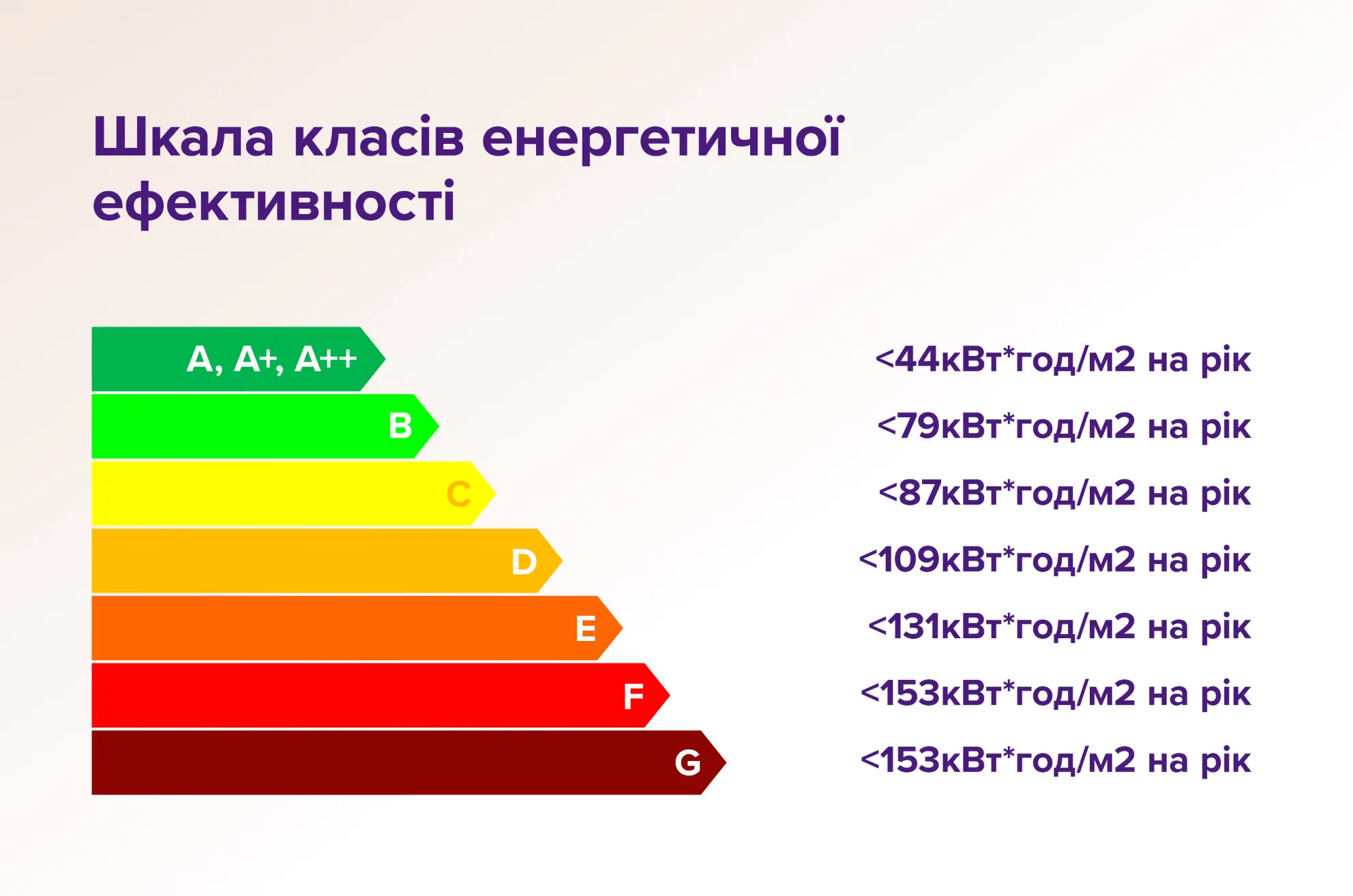
In Ukraine, there are several classes of building energy efficiency:
- BUT;
- IN;
- WITH;
- D;
- E;
- F;
- G.
It's not just letters. The class is determined based on several factors:
- calculation of energy consumption;
- heating;
- cooling;
- ventilation, etc.
Buildings close to class A will consume minimal energy. Which is an advantage for residents. Expenses for utility bills are also small, but comfort remains at a high level.
Class A
This is the highest energy consumption class. New buildings of this class comply with all modern standards, for example, the DBN for energy efficiency.
The main advantage of the highest class is the creation of a comfortable microclimate in the apartment. Energy costs are minimal.
The cost indicator is provided by two factors:
- modern high-quality materials;
- modern construction technologies.
The apartment remains warm even in severe frosts. While in the summer it hardly heats up. The costs for the residents are minimal.
Among the characteristic features of heat conservation are the following:
- multilayer insulation of facades, roof and foundation;
- few "cold bridges" in the structure;
- hermetic entrance doors;
- modern ventilation systems with light recovery;
- LED lighting in public areas;
- less impact on the environment.
Typically, the energy efficiency of a Class A home implies the highest price segment.
Class B
Another high energy efficiency class of the building, slightly inferior to A. For many residents of residential complexes or potential home buyers, it is the most optimal for several reasons:
- modern materials;
- modern engineering systems;
- insulation;
- more affordable apartment price.
Since energy consumption is low, heat loss is also minimal. This is ensured by modern engineering systems and high-quality insulation. Less energy is consumed to achieve a comfortable temperature. Especially when compared to lower-class houses. Heating costs are also insignificant.
The apartment maintains the desired microclimate, regardless of the weather. This is an important advantage of class B.
The most common signs of such housing are:
- insulation of the facade, basement and roof;
- energy-efficient double- or triple-glazed windows;
- individual heating point with weather regulation;
- high-quality ventilation.
Class B new buildings belong to the high price segment, but are more affordable than class A houses.
Class C
C – average level of energy efficiency of the building. This class is the most popular among Ukrainian new buildings.
Apartment owners have all the necessary conditions for living. Energy is used moderately, which is an advantage of the class. Even though classes A and B are more efficient, class C buildings are attracting more and more buyers.
For heating or ventilation of the home in the summer, more energy is required than in the previous two classes. But the costs are not very different. They can be classified as moderate:
- winter is warm, but sometimes you need to increase the heating temperature;
- Summer is cool, but active use of air conditioners is the norm.
Class C has the following characteristics:
- insulated facades according to DSTU energy efficiency standards;
- double-glazed windows;
- thermally insulated roofs and technical rooms;
- modern heating and water supply systems;
- energy-saving lighting of public areas.
Class C housing belongs to the middle price segment.
Low class — D, E, F, G
D, E, F, G – classes of buildings with low energy efficiency. Here there is a high or increased level of energy consumption, significant heat loss, and large utility bills.
Class D – increased consumption, high heating costs:
- thermal insulation is lower than required;
- no air recovery;
- heat loss through the facade or roof;
- average level of tightness of structures;
- The cost is below average.
Class E – high level of energy consumption, high heating costs:
- insufficient thickness of thermal insulation or its partial absence;
- inefficient heating systems;
- weak sealing of structures;
- lack of energy consumption control systems;
- budget segment.
Class F – very high energy consumption, very high heating bills:
- minimal or no insulation of facades;
- old windows;
- outdated heating systems;
- heat loss through walls and roof;
- lack of energy-saving technologies;
- one of the lowest prices on the market.
Class G – extremely high level of energy consumption, maximum heating costs:
- there is no modern thermal insulation;
- old windows and doors;
- heat loss through enclosing structures;
- worn-out heating and ventilation systems;
- the lowest price on the market.
The main difference between high classes and D, E, F or G is the pricing policy. But this is an illusory advantage. The low cost of housing automatically implies significant financial investments in the future. For example, for wall insulation and utility bills.
Energy efficiency certification
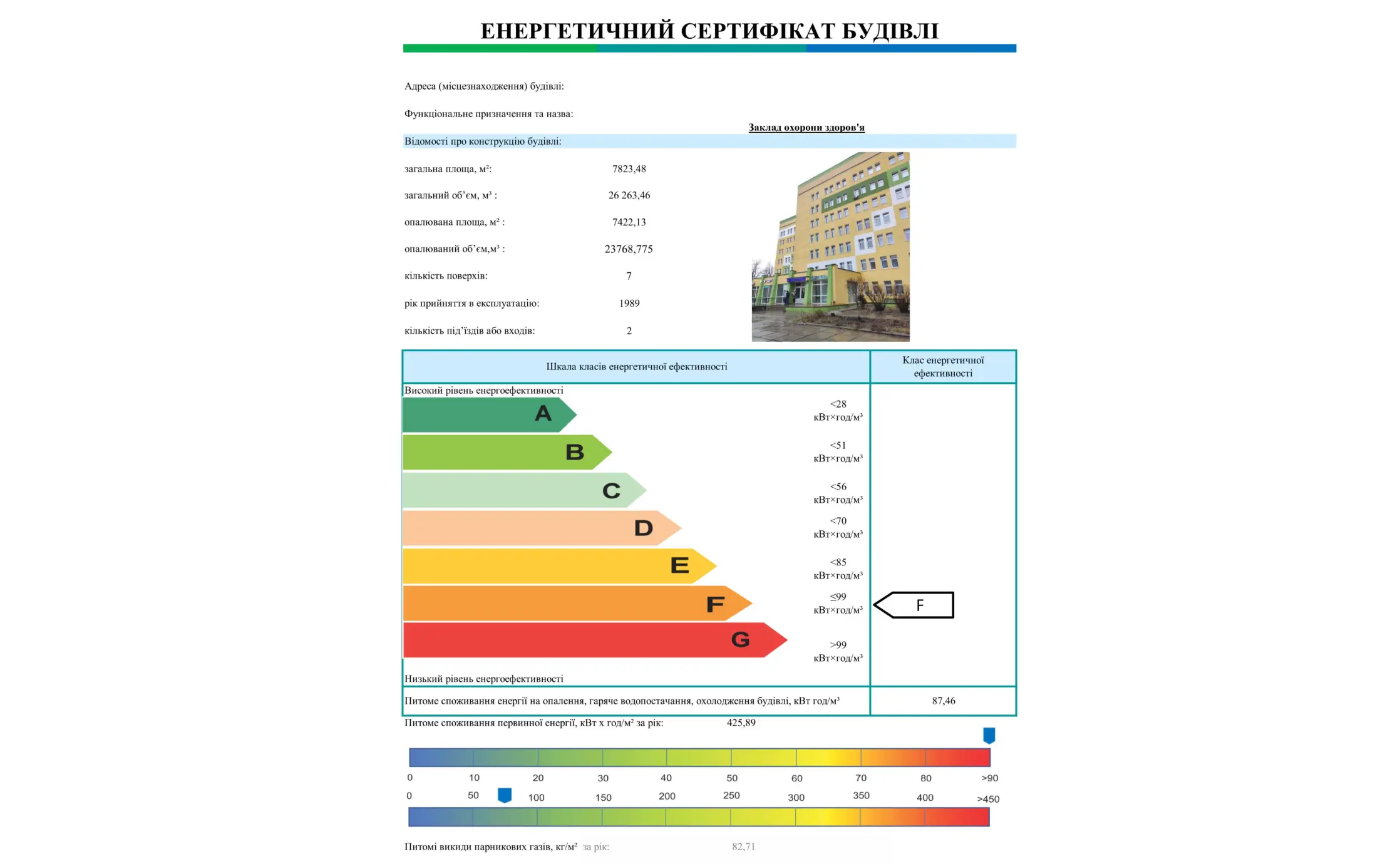
Energy efficiency certification is a verification of the compliance of actual energy efficiency characteristics with the declared ones. In simple words, consumption is checked
The procedure is available to all buildings. Its completion involves the issuance of an energy efficiency certificate.
Only a specialist can conduct certification and issue a document. This is an energy auditor who is officially registered in the state register and has the right to conduct an inspection.
The building certification process is carried out sequentially:
- review of documentation from the developer;
- building inspection;
- house design assessment;
- verification of engineering solutions;
- calculation of energy consumption.
Every modern new building must receive a certificate. It confirms the energy efficiency class of the building. Ignoring certification is a violation of the current legislation of Ukraine. In addition, the absence of a document does not allow the building to be put into operation.
The certificate contains all the basic information about the house.
- The current energy efficiency class (at the time of inspection) is A-G.
- Estimated energy consumption level.
- Building heat loss indicators.
- Characteristics of engineering systems.
If necessary, the specialist can also make recommendations for improving energy efficiency. These are also attached to the certificate.
Before purchasing a home, regardless of the residential complex, reviewing the document is a prerequisite.
The certification procedure is regulated by the Law of Ukraine “On Energy Efficiency of Buildings”. It defines:
- requirements for the certification process;
- rights and obligations of energy auditors;
- cases of mandatory issuance of certificates.
The assessment also uses State Building Regulations (DBN) and State Standards of Ukraine (DSTU).
How and where to check the energy efficiency class of a new building
The energy efficiency of a house is an indicator that determines the purchase. It is not recommended to focus on the advertising of the developer or sales manager. Only the certificate demonstrates official data.
All potential home buyers have access to information about the energy efficiency class of a home.
Data can be in:
- the building's energy certificate;
- project documentation;
- technical documentation of the residential complex;
- the developer's official website or in the description of the residential complex;
- documents accompanying the commissioning of the building.
During the consultation, potential buyers should find out additional information.
- What is the official energy efficiency class?
- Is there an energy certificate?
- Who conducted the certification?
- What windows are installed in the house?
- What is the thickness of the facade and roof insulation?
- Does the house have individual heating?
- What will be the approximate heating costs during the heating season?
- What are the utility costs in the summer?
If the building meets the declared class, the sales manager will provide detailed answers. In addition, they will be documented.
But do not forget that only the certificate is official confirmation of the energy efficiency of the house.
Visnovok
In the article, we examined in detail the issue of energy efficiency of a house. In particular, we analyzed this concept, defined and characterized the main classes. Additionally, we determined the impact of energy efficiency classes on the microclimate of the apartment.
The features of certification, its regulation through laws and regulations, and compliance with the declared class were also determined. Such information helps to correctly evaluate current offers from developers.
Before buying, we recommend following a few tips:
- choose new buildings of class A, B or C;
- always ask the developer for an energy efficiency certificate;
- check not only the class, but also the technical characteristics of the building;
- clarify the technologies used in construction (pay special attention to energy conservation technologies);
- Don't be shy about asking for project documentation.
Remember that high-quality energy efficiency of a house is a guarantee of comfort. This is not just the whims of energy auditors or developers. High class determines the microclimate, costs and relevance of a particular dwelling in decades.