
Even if you rent a home without the involvement of an agency, additional costs cannot be avoided. A deposit for renting an apartment is a standard practice that most owners consider a necessary guarantee of the safety of their property. And it is easy to understand them: in the event of damage or early termination of the contract, compensation from this payment is almost the only real mechanism for compensating for losses.
However, the deposit often becomes a source of conflict — especially when the landlord refuses to return it. Our experts told you how to properly draw up a lease agreement taking into account the security deposit, in which cases the deposit may be lost, what to do if it is not returned to you, and how to avoid such situations.
What is a deposit when renting an apartment?
A deposit when renting an apartment is a form of financial guarantee that confirms the seriousness of the tenant's intentions and ensures the protection of the landlord's interests. In practice, there are two main types of such payments: insurance and guarantee deposits.
Insurance deposit — is an amount determined at the discretion of the landlord, which is not tied to the monthly rent. It serves as a reserve in case of damage to the property, in whole or in part, due to the tenant's fault. This refers to the potential costs of restoring the interior, furniture or appliances after the end of the contract.
Security deposit — is actually a payment for the last month of residence. Its purpose is to protect the owner from the risk of non-payment, especially during the final period of residence. Although at the stage of settlement, double payment (rent + guarantee) may be financially burdensome, if the terms of the contract are properly fulfilled, the deposit is returned, effectively compensating for the last month of rent.
The most common type of security deposit in the Ukrainian market is a security deposit. It is easy to calculate, has transparent return terms, and can be used as a source of compensation in the event of a tenant's breach of obligations.
How to make a deposit in a contract
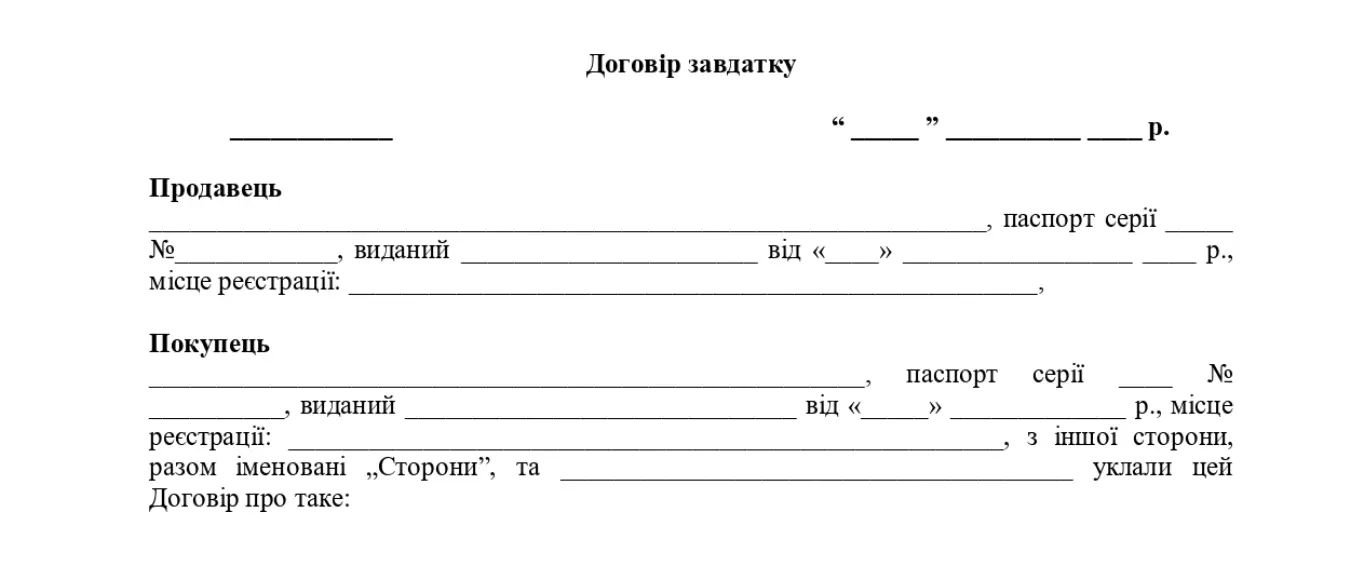
A verbal agreement between a tenant and a landlord has no legal force in the event of a conflict. That is why the deposit for renting an apartment must be recorded in writing - in the rental agreement and accompanying documents - to avoid misunderstandings and protect your rights.
What should be written in the lease agreement?
In order for the deposit for an apartment to fulfill its protective function for both the tenant and the landlord, its terms must be clearly spelled out in the contract. The main points to pay attention to are:
- Deposit amount;
- Conditions and grounds for returning the deposit;
- The deadline by which the return must be made;
- Circumstances under which the deposit is not returned to the tenant.
The last clause usually covers cases of property damage, breakdowns of household appliances due to the tenant's fault, or the need for repairs. The contract also often stipulates a rule about notifying the landlord in advance of departure (usually 30 days). If the tenant violates this condition, the deposit can be withheld as compensation for lost income.
In addition, the contract or an annex to it must contain the following items:
– responsibility for payment of utility bills;
– a description of the condition of the apartment at the time of moving in, recording even minor defects, such as damage to door handles or locks, scratches on the parquet floor, damaged sockets, etc.;
– the procedure for carrying out repairs if they are not caused by the tenant’s actions;
– principles of calculating losses and the mechanism for covering them from the deposit.
Clear documentation of all terms minimizes the risk of disputes and ensures transparency for both parties. When drawing up a contract with a notary, it is recommended to draw up two or three copies of the act - one for each party and one for the notary's file.
How to properly draw up an acceptance certificate for the transfer of an apartment
To avoid misunderstandings during the transfer of housing, our experts recommend drawing up a housing acceptance and transfer act. This document records the condition of the apartment, the presence of furniture, appliances, and other valuable items at the time of move-in.
The act must contain:
- a complete list of furniture and appliances with brand names;
- a description of the condition of each item and the apartment as a whole;
- a list of valuables (paintings, vases, decor, etc.);
- photo documentation of individual objects, confirming their condition (to simplify verification);
- signatures of both parties with the date of preparation of the document.
Usually, the deed is prepared by the owner of the apartment, so the tenant must carefully check its compliance with the actual condition of the apartment.
What to do if the deposit is not returned

Sometimes there are situations when the landlord refuses to return the deposit for the apartment without obvious reasons or prior remarks. In such a case, there are 2 ways to solve the problem: a more loyal one is to try to negotiate directly with the owner of the apartment; and if that doesn't work, contact law enforcement.
Negotiations with the landlord regarding the deposit
The first step in the event of non-return of the deposit is to have a calm and constructive conversation with the landlord. If possible, it is worth contacting in writing (via messenger, for example), briefly outlining the essence of the situation and referring to the relevant clauses of the contract. It is important to avoid emotional pressure or accusations - this will only complicate further communication.
If the landlord has any complaints about the condition of the apartment or property, ask them to specify them and provide photos or a list of damages. If there are no valid reasons for withholding the deposit, provide a reasoned reminder of the obligations stipulated in the contract.
Often, constructive communication can resolve the situation without further legal action. Therefore, it is recommended to keep all written correspondence, records, and copies of the contract - they may be needed if the issue needs to be resolved formally.
Where to go if the owner does not return the deposit (police, court, lawyer)
If negotiations with the landlord have not yielded any results, it is worth moving on to formalized actions. It is important to act consistently, in compliance with legal norms.
- Step 1. Legal advice. First of all, you should contact a lawyer who specializes in civil or housing law. He or she will analyze your contract, the act of acceptance and transfer, and other documents, assessing the chances of a successful resolution of the dispute. This will help you avoid unnecessary time and mistakes in your further actions.
- Step 2. Complaint to the landlord in writing. Based on the advice of a lawyer, you should draw up an official claim demanding the return of the deposit. The document must indicate the details of the contract, the amount of the deposit, the terms of its return and the legal grounds for your claim. The claim is sent by registered mail or delivered in person against signature.
- Step 3. Contact the police (in case of fraud). If the landlord does not respond and the deposit was withheld without reason, you can file a complaint with the police. You need to briefly explain the situation, attach copies of the contract, the act of acceptance and transfer, correspondence and claims. The police will open proceedings on the fact of possible fraud.
- Step 4. Lawsuit. In parallel or after contacting the police, you have the right to file a civil lawsuit in court to recover the deposit. The lawsuit should substantiate your claims, referring to the terms of the lease agreement. Court proceedings take longer, but provide an opportunity to formally oblige the landlord to return the funds.
Necessary documents:
- lease agreement with signatures of both parties;
- apartment handover certificate;
- correspondence with the landlord (especially regarding the deposit);
- a copy of the written claim;
- receipts or statements about the transfer of the deposit (in cash or by transfer);
- photo recording of the condition of the apartment (if available).
The more documents you collect, the higher the chances of a positive decision in your favor.
How not to lose your deposit: tips
To avoid conflicts and not lose the deposit for renting an apartment, it is important not only to properly execute the documents, but also to follow several basic rules - before moving in, while living in the rented accommodation, and directly when leaving the apartment.
Before check-in
At this stage, proper documentation is your main tool for protection. Before you hand over the keys and make the first payment, it is important to make sure that all the terms of the lease are recorded in writing. First of all, sign a lease agreement with clearly stated terms for returning the deposit for the apartment, deadlines and exceptions. The agreement should not contain generalizations - each amount, obligation and responsibility of the parties should be specified.
Be sure to draw up a certificate of acceptance and handover of the apartment. Record the condition of the premises, the presence of furniture and appliances, describe even minor defects. Add photo evidence to the certificate - this will simplify the assessment of the condition of the apartment upon departure.
We also recommend transferring the deposit in cash or issuing a receipt for cash payment. Be sure to indicate the amount, date, reason for payment, and signatures of both parties in the document.
During your stay
Adhering to the terms of the lease agreement in everyday use of the apartment is the key to preserving the deposit. First of all, it is worth avoiding unauthorized changes to the apartment - redevelopment, replacement of equipment or repairs without the consent of the owner may be grounds for partial or full retention of the deposit.
All faults and breakdowns, even minor ones, should be recorded in writing and reported to the landlord immediately. This will help avoid accusations of damage that may have occurred through no fault of yours. It is also important to keep evidence of communication - correspondence, photos, receipts for minor repairs or service.
Avoid late payment of utility bills: debts remaining after eviction are often covered by the deposit. If the apartment is rented to several tenants, agree on the division of responsibilities among them. Your task throughout the entire period of residence is not to violate your obligations, to be in touch with the landlord and, if necessary, to document your good faith.
When evicted
Most of the time, it helps to avoid problems at this stage by terminating the cooperation with the landlord in accordance with the terms specified in the contract. First of all, notify the landlord of your eviction, and remember that failure to meet the deadline is often a formal reason for withholding the deposit. Before leaving, clean the apartment, eliminate minor damage if it occurred during the stay, and return the apartment in the condition in which it was at the time of moving in (taking into account natural wear and tear).
When transferring housing, be sure to draw up an act of returning the apartment. It should record: the condition of the property, meter readings, and the fact that there are no claims from the landlord. It is advisable that the act be signed in the presence of both parties - with a mutual inspection of the apartment. It is worth clarifying separately when and in what form the deposit will be returned. If the owner reveals claims, demand their written justification and recording in the appropriate document.
When the deposit is not returned
The landlord has the legal right to keep the deposit if the terms of the contract are violated. In most cases, the deposit is not refundable under the following circumstances:
- early termination of the contract without notice within the established time limits;
- late payment of rent or utilities, which has caused arrears;
- damage or spoilage of property in the apartment;
disappearance of items that were specified in the acceptance and delivery report, without - a reasonable explanation.
A formal reason for withholding the deposit may also be a violation of the rules of use of the accommodation, if these conditions are stipulated in the contract. That is why it is important not only to read the document carefully before signing, but also to adhere to the agreed rules during your stay.
Renting a home without a deposit is the exception, not the rule. In such cases, the parties knowingly take on additional risks. Such an agreement is possible only between people with a personal level of trust - for example, relatives or close acquaintances. In most other cases, a deposit is a fair tool for protecting both parties.
Visnovok
A deposit for renting an apartment is an important part of the contractual relationship, which ensures mutual responsibility between the tenant and the landlord. A successful real estate rental begins with a clear written registration of all conditions - from the amount of the deposit to the procedure for its return. It is competent documentation at the start that reduces the risks of misunderstandings in the future.
Most often, conflicts arise due to the lack of a contract, an unexecuted act of acceptance or oral agreements that have no legal force. If the situation does reach a dispute, it is important to act consistently: try to resolve the issue through negotiations, and if that fails, contact a lawyer, the police or the court with a prepared package of documents.
Remember: a deposit is an instrument of mutual trust that only works when the parties adhere to their obligations. For the tenant, it is a financial incentive to take care of the apartment and adhere to the terms of the contract, and for the landlord, it is a guarantee of covering possible risks.