
Subletting is a way of transferring a space to another person for use. This is a popular practice among tenants or companies that receive some benefit from their own lease - they can rent out the space under certain conditions.
Our experts analyzed all the features of subleasing premises, the rules for its use, as well as the main risks for all parties. The experts used current forms of legislation, practical examples of subleasing premises. They explain the documentation and the possibilities of subleasing premises. According to official sources, the main issues that should be considered before concluding a sublease were highlighted.
What is subleasing a premises?
Sublease is the transfer by the tenant of part or all of the leased property to another person for use for a fee. All issues of sublease are regulated by the Civil Code of Ukraine. In particular, Article 774 allows the transfer of premises to sublease. But subject to the consent of the lessor.
There is a difference between renting a space and subletting it. Regular rental involves the transfer of premises from the owner to the tenant. In this case, a contract is concluded with all the necessary conditions.
Sublease involves the transfer of part or all of the premises from the tenant. In this case, he will act as the sublessor.
Advantages and disadvantages of subleasing
Subletting an apartment has advantages and disadvantages:
- reduction of housing costs – the tenant can transfer the housing and compensate for part of the monthly payment;
- flexibility in the use of the premises – the premises are used more efficiently;
- quick search – the subtenant can receive a ready-made premises without searching and drawing up an agreement with the owner;
- dependence on the main contract – if the lease agreement is terminated, the sublease automatically terminates;
- impossibility without the owner's consent – it is impossible to conclude a sublease agreement without the landlord's permission;
- additional liability of the tenant - he will be responsible to the owner for the premises and its possible damage.
Disputes often arise between the parties regarding the terms of the sublease. This is also a disadvantage.
Sublease terms
The sublease lasts for as long as the main lease allows. It can be shorter, but never longer. Once the tenant has granted the right of use, the subtenant must specify the terms.
It is impossible to extend a sublease without the owner. If the term has expired, you must first extend the lease term. This will automatically extend the term of the sublease. Sometimes owners do not give permission again.
Attempts to use the premises without the owner's consent or after the extension of the term may be considered an offense. The owner has the full right to resolve the issue in court.
How is a sublease drawn up?
To make the process comfortable for all parties to the transaction, it is worth properly drafting a sublease. If you have no previous experience, it is recommended to contact a lawyer for legal advice.
A sublease agreement is possible only after the consent of the owner of the residential or commercial premises. Sometimes other conditions are added. The correctness of the executed agreement is a guarantee of safety and protection of all parties.
Owner consent
The owner must give permission for subletting. This is a basic condition. A written form will help avoid possible disputes in the future. The parties rarely agree orally.
In writing, it is necessary to indicate not only permission, but also other information:
- owner details;
- property characteristics;
- subtenant details, if already defined;
- the term of the sublease.
Written consent allows:
- avoid controversial situations;
- confirm that the owner has been notified of the transfer of the premises to another person.
If the owner has prohibited subletting, this is a good reason to terminate the lease agreement.
Main documents
To conclude an agreement, you need to prepare a standard package of documents. These are documents of all participants in the agreement:
- passports;
- identification codes;
- other necessary proof of identity.
Additionally, attention is drawn to:
- main lease agreement – confirmation of the tenant's right to use the premises and its transfer to a third party;
- written consent of the owner – allows the transfer of property to sublease;
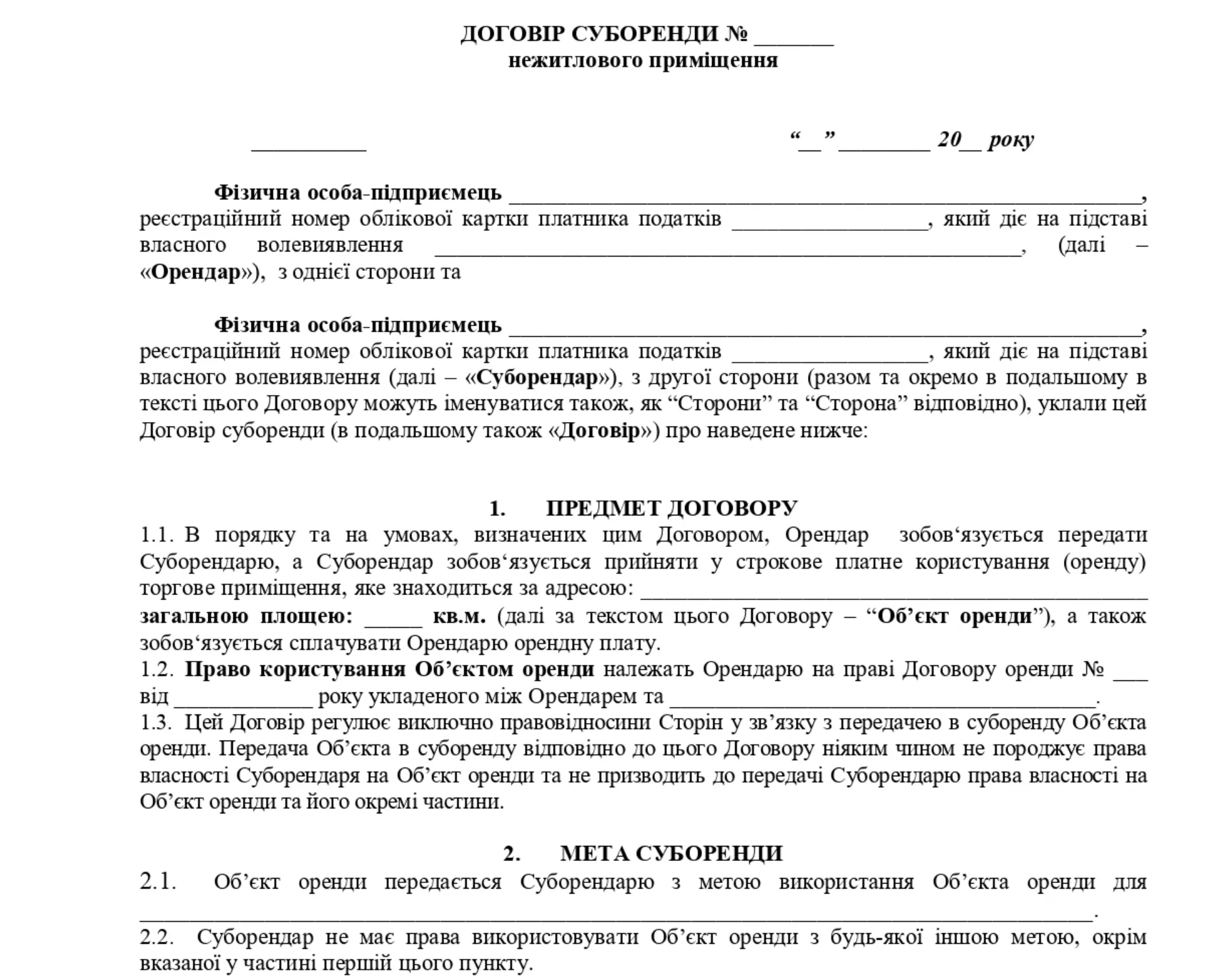
- Sublease agreement – is concluded after all necessary agreements between the parties.
It is advisable to draw up a certificate of acceptance and transfer of the premises.
Responsibilities of the parties
The subtenant is responsible to the tenant for:
- preservation of property;
- rooms;
- timely payment;
- compliance with all rental conditions.
The tenant, in turn, is responsible to the owner of the premises. Even if the damage was caused by a subtenant, the owner can contact the tenant directly.
The subtenant pays utility bills to the tenant, while the tenant pays rent to the owner, according to the terms of the lease agreement.
In what cases is a sublease issued?
A sublease is issued when the tenant has the right to use the premises. But has certain reasons for fully or partially transferring the premises to another person. This format is often used for:
- cost optimization;
- temporary transfer of free space;
- shared use of the premises.
Sublease can apply to residential or commercial real estate.
Sublease of residential property
Sublease of residential real estate is the transfer by the tenant of an apartment, house or parts thereof for use by another person for a fee. This means that a person who rents housing from the owner can rent it to another tenant. But on condition that the owner knows about it.
This format is often relevant if the tenant:
- temporarily moving out;
- does not plan to use the housing for a certain period of time;
- wishes to receive partial compensation for rental costs.
Example: A tenant is going abroad for a few months. Losing the accommodation he found through an ad about rent an apartment, or at home does not want to. In this case, sublease is the best solution for both the owner and the tenant.
When drawing up a sublease, it is necessary to take into account that the subtenant receives the right to use the housing only within the limits of the rights of the tenant. The term of the sublease cannot exceed the term of the main lease agreement. In case of damage to the owner, the main tenant is usually liable.
Sublease of commercial real estate
Subleasing commercial real estate is the transfer by the tenant for use of:
- office;
- warehouse;
- store;
- other commercial premises.
This format is actively used by entrepreneurs - when part of the space is not used at all or only minimally.
When subleasing commercial real estate, special attention should be paid to:
- the terms of the main lease agreement;
- with the consent of the owner.
Sometimes the latter may request a security deposit – for their own reinsurance.
The subtenant uses the premises within the rights of the tenant. The term of the sublease must also not exceed the term of the main lease.
Visnovok
In this article, we have examined in detail the concept of "sublease", in which cases it is relevant, and what features need to be taken into account when drawing it up. The difference between a regular lease and a sublease was determined. We also examined the procedure for concluding an agreement, the responsibilities of all parties, and possible risks.
Readers can gain practical understanding of how to properly formalize sublease relationships.
To ensure the process is safe, it is recommended to pay attention to certain tips:
- Obtain written consent from the owner for subletting.
- A sublease agreement shall be concluded only in writing.
- Clearly state the terms, payment, and conditions.
- Check the documents of all participants in the transaction.
- Determine in advance the procedure for compensating for possible damage or expenses.
A properly executed sublease makes it possible to use the property effectively and also additionally protects the interests of all parties.